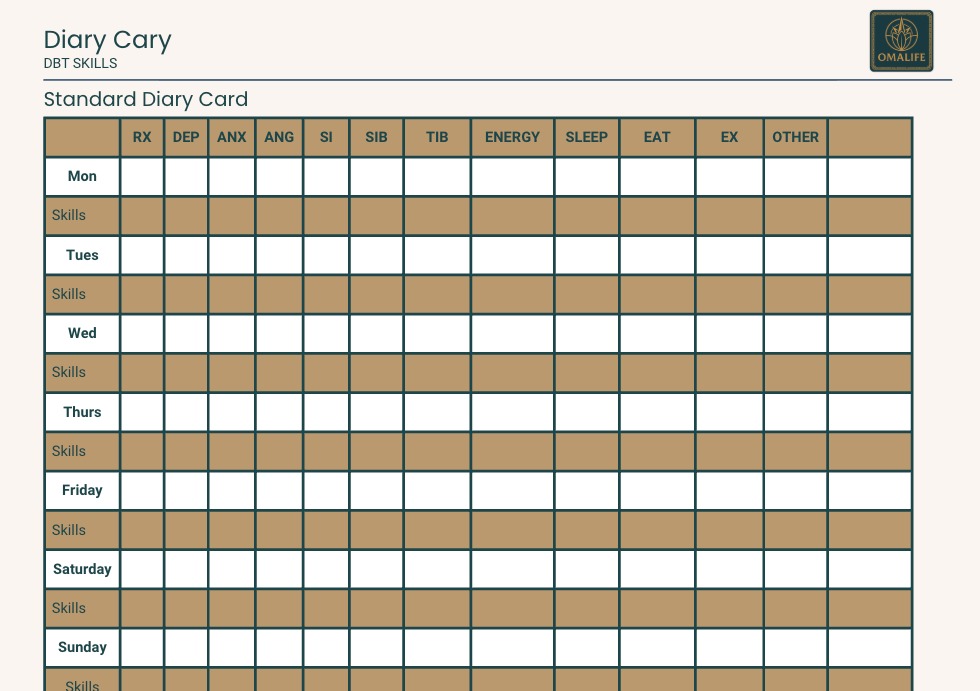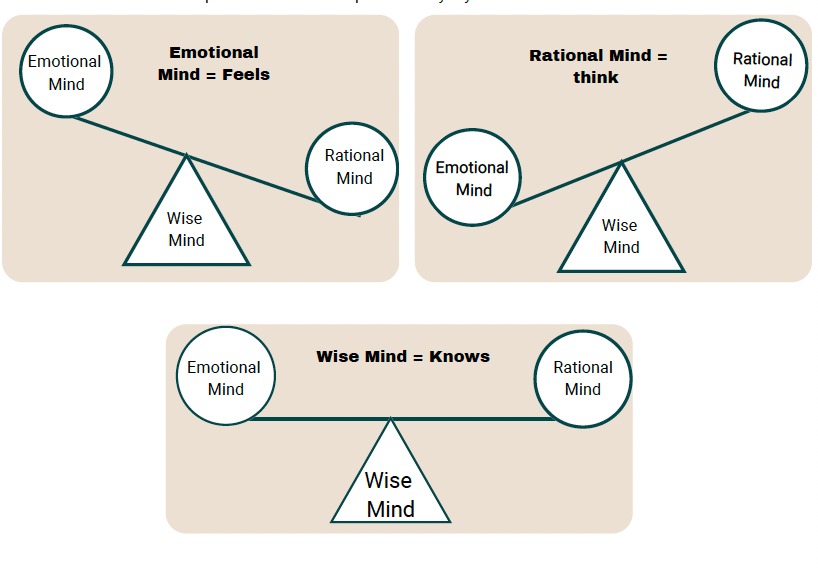
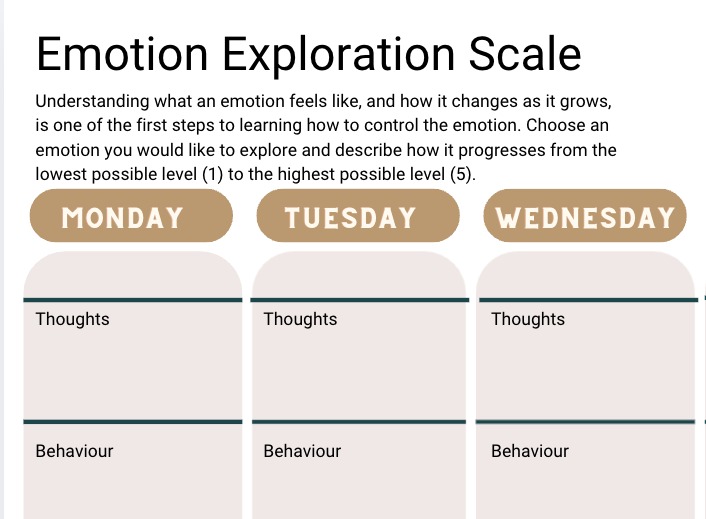

A DBT diary card is a simple tool you use every day to check in with yourself. It helps you notice your feelings, your thoughts, and what you do during the day. It also helps you see what coping skills you used when things felt hard. Many times, our feelings can change quickly. It can be hard to remember what happened or why we felt a certain way. This worksheet helps you slow things down. When you write things down each day, you can start to see patterns. You may notice what triggers your feelings, what makes them stronger, and what helps you feel calm again. Over time, this can help you feel more in control. It can also help you and your therapist focus on what matters most in your sessions.
1. Pick a time each day Try to fill this out at the same time every day. Many people do it at night, but you can choose what works best for you.
2. Think about your whole day Take a quiet moment to remember your day. Think about how you felt, what happened, and how you responded.
3. Rate your feelings honestly There is no “right” answer. Just choose the number that feels true for you.
4. Notice your urges without judgment Urges are normal. You are not “bad” for having them. This step helps you become more aware.
5. Mark the skills you used Even small efforts count. If you tried something, it matters.
6. Reflect on your day Write one small win and one thing you want to work on. This helps you grow step by step.
7. Use it over time The more you use this worksheet, the more helpful it becomes. Patterns will start to show.
This worksheet is for teens and adults.
It is helpful for people who:
Feel strong emotions that are hard to manage Notice urges and want to understand them better Want to build healthy coping skills Are in therapy or thinking about starting Want a simple way to track their mental health each day
This tool is especially useful if you feel overwhelmed, stuck, or unsure why your mood changes. It helps you slow down and make sense of your experiences.
You can use this on your own, or with support from a therapist. Over time, it can help you feel more aware, more in control, and more confident in how you handle difficult moments.